

Two years from now, the hands people trust are yours.
Registered as “Medical Massage Therapy”
A 2,200-hour diploma preparing you for the massage therapy entry-to-practice exam pathway — and to run your own practice.
Overview
Train for the actual job.
The practice of massage is universal, with many referrals from health care professionals for its physical, mental, and emotional benefits. Massage therapy is an evolving field—diverse and filled with opportunity. Axiom's Medical Massage Therapy program is current, evidence-based, and aligned with the latest research. We approach massage education with innovative ideas that appeal to a variety of learners, combining academics, hands-on training, and practicum experiences.
Read the full overview
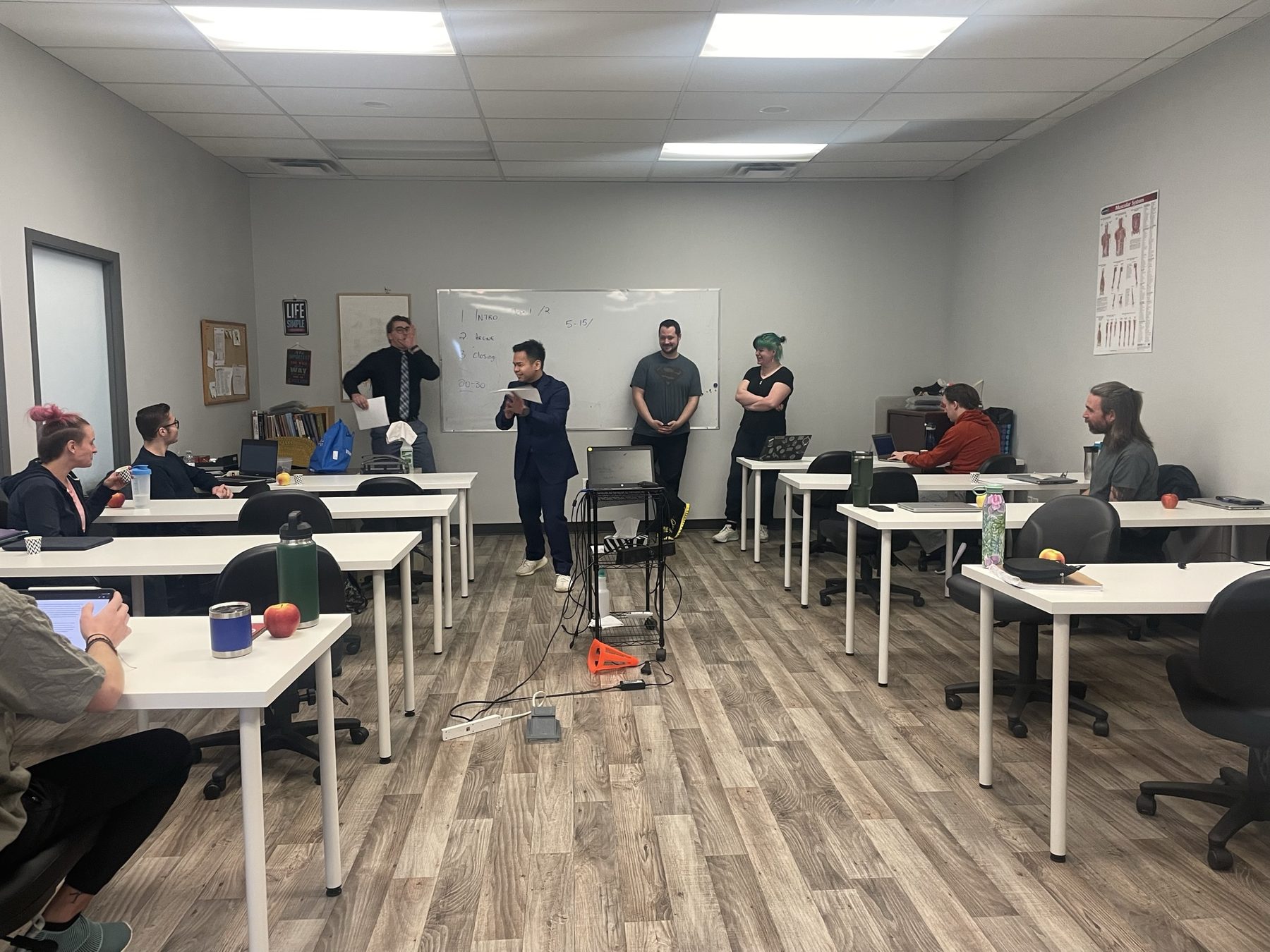
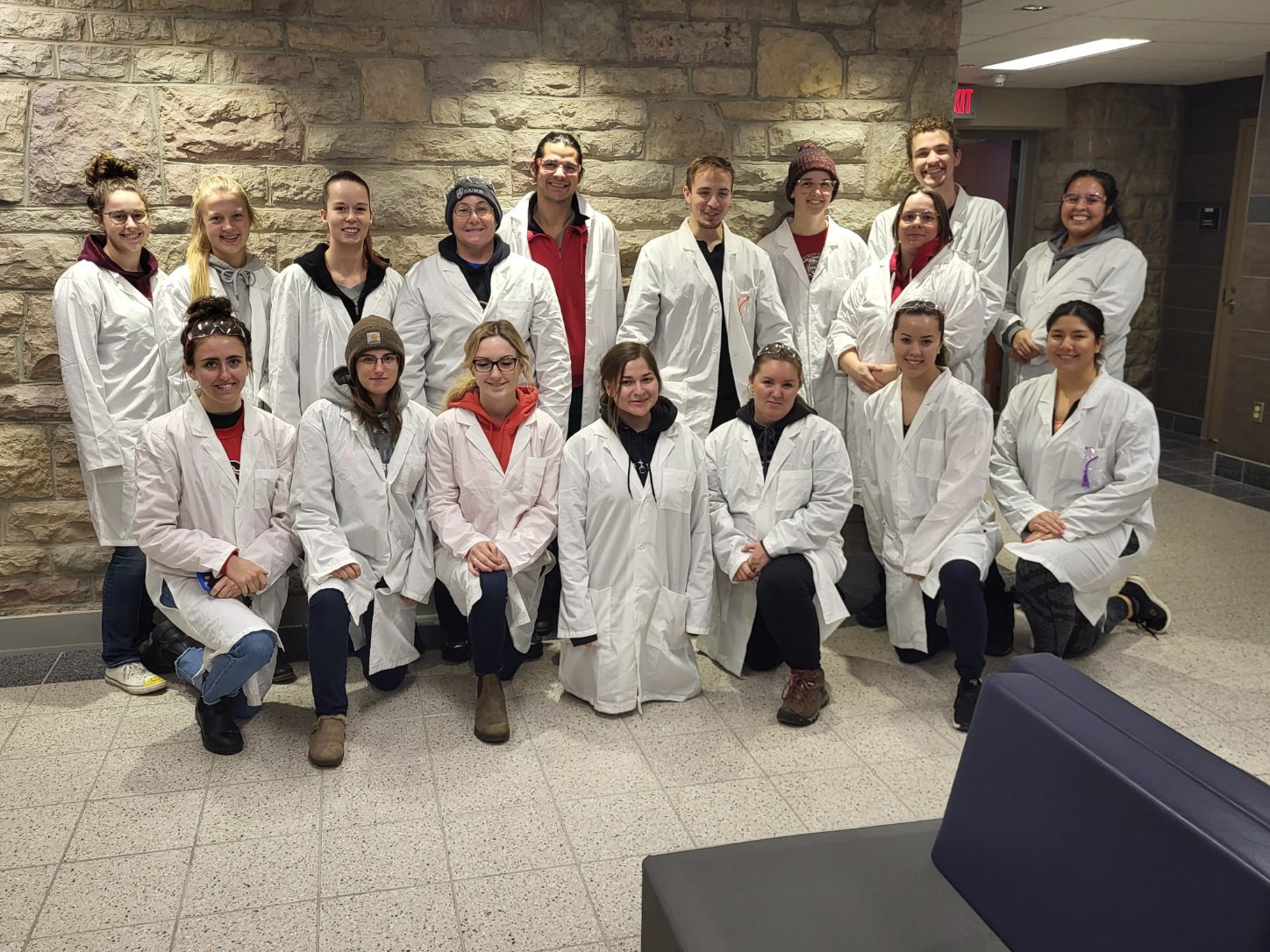
Students engage in lectures, labs, class discussions, workshops, outreach missions, and on-demand online classes that provide flexibility and support; this blended learning model allows students to balance their studies with personal commitments. Highlights include cadaver labs with the University of Saskatchewan biology department and anatomy labs where students literally build the body from the inside out.
In our experience across the last ten years, the majority of graduates have secured employment or clinic placements before graduation — most RMTs go on to self-employed practice.
This two-year, 2,200-hour diploma prepares you for board exams and a career in massage therapy. The program is challenging, but we are committed to helping you reach your goals and full potential. At Axiom, we foster a supportive learning environment that is fun, positive, and inspiring.
Career paths
Where this diploma takes you.
Government of Canada Job Bank, Nov 2025
- Self-employed practice (most common)
- Group and team clinics
- Private practice
- Hospitals
- Rehabilitation centres
- Extended care
- Educational institutions
Massage therapy is not currently a legislated (regulated) profession in Saskatchewan — the Saskatchewan College of Massage Therapy is expected to form in the next few years. Axiom's program is built to support the Canadian Inter-Jurisdictional Practice Competencies; the “RMT” designation is held through membership in a professional association, not a provincial licence.
Most RMTs are self-employed, commonly renting a treatment room as a sole proprietor — so income scales with the practice you build. Clinic rates in Saskatoon average $100–$115 for a 60-minute massage (per the college, 2026).
The college's own earnings estimate, from ten years of graduates: practising RMTs typically make $65,000–$100,000 a year — roughly $40,000–60,000 in your first year while you build a practice, and $75,000–100,000 by your third (college estimate, 2026).
The Government of Canada Job Bank rates the Saskatchewan employment outlook for massage therapists as Good (3-year outlook, 2025–2027).
What you'll be able to do
By graduation, with nobody looking over your shoulder.
Orthopedic assessment, remedial exercise, and treatment planning for real presenting conditions.
Swedish massage through prenatal care — graduates finish Prenatal Level A certified — plus infant, paediatric and geriatric care, with workshops in Thai massage, Shiatsu, myofascial release and sports massage.
The only massage college here that teaches you to be an entrepreneur, not only a therapist.
Exams, clinic practice, and what graduation requires
Graduates hold the “RMT” designation through membership in a professional association such as MTAS or NHPC. No Saskatchewan association currently runs a board exam — the MTAS MQE was discontinued in spring 2026, ahead of the expected formation of the Saskatchewan College of Massage Therapy — and the program is built to support the Canadian Inter-Jurisdictional Practice Competencies so graduates are ready when regulation arrives.
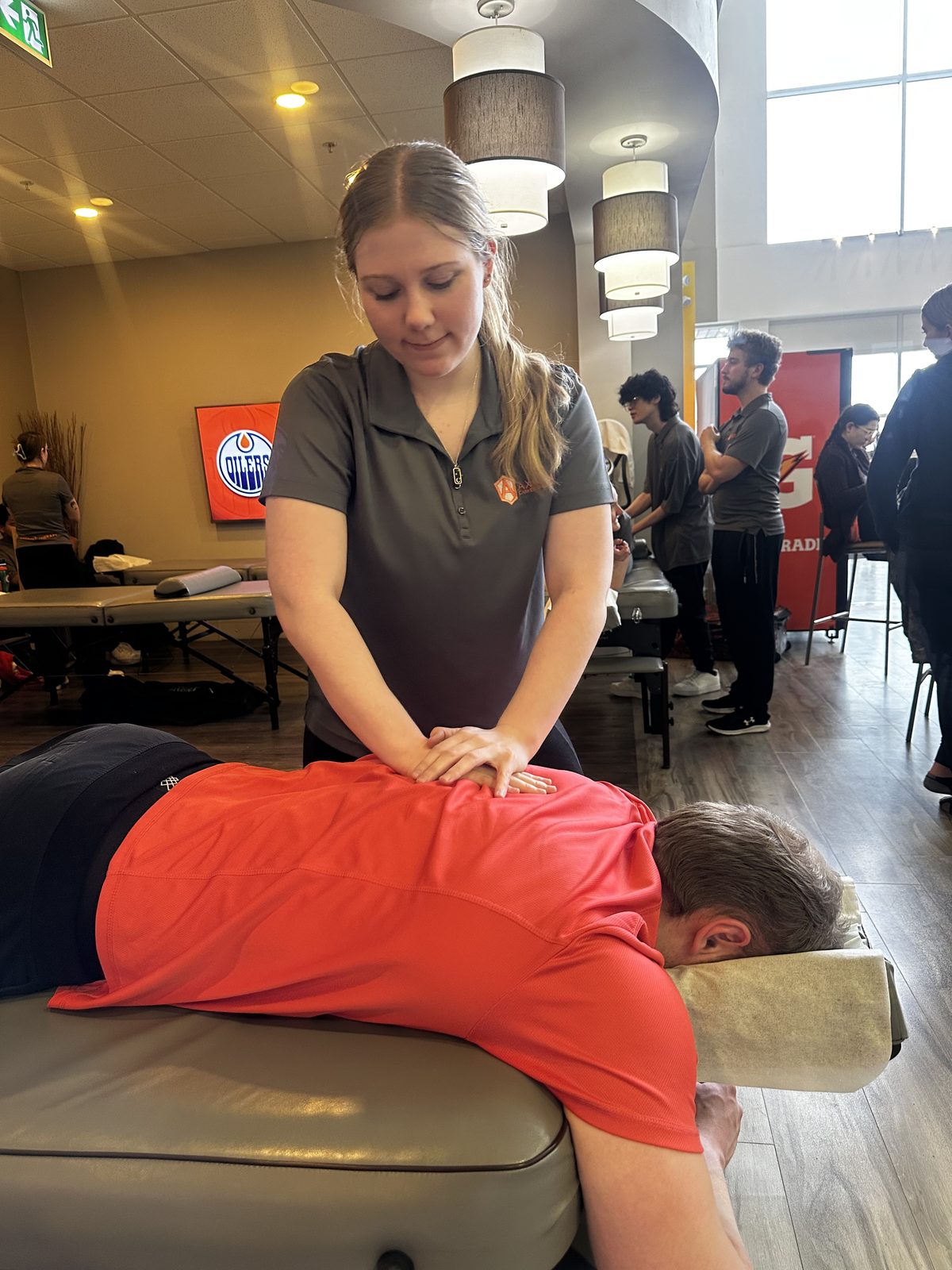
Deliver supervised massage treatments to the public through the student clinic: obtain consent, complete subjective and objective assessment, treat, provide homecare, chart in an EMR using SOAP notes, and maintain sanitisation standards.
Run the business side of a practice — the Business course is part of the diploma.
Specialized training includes 14
What's included 7
Courses
What you'll study.
2 years, 4 terms plus a continuous practicum — open any course for its full description.
Practicum
Administration
CPR (Level C with AED)
Ethics & Professionalism
Gross Anatomy 101
Medical Terminology
Massage Theory & Practical 101
Orthopedic Assessment 101
Physiology 101
Gross Anatomy 120
Massage Theory & Practical 120
Nutrition 101
Orthopedic Assessment 120
Physiology 115
Remedial Exercise 101
Pathology
Practicum
Gross Anatomy 200
Hydrotherapy 101
Kinesiology
Massage Theory & Practical 200
Neuroanatomy
Orthopedic Assessment 200
Pharmacology 101
Business
Gross Anatomy 250
Massage Theory & Practical 250
Orthopedic Assessment 250
Remedial Exercise 120
Research Methodology 101
Cadaver labs are no longer a guaranteed part of the program. When offered through MTAS (Axiom students are MTAS student members), students have the option to join for $187.50 incl. GST.
Admission requirements
Ready to apply?
21 or older by the first day of class, and finished high school at least two years before classes start? Tick “Life-Long Learner” when you apply — transcripts waived, academic prerequisites exempted.
How the pathway worksAny one of the following:
Tuition & fees
A clear cost, published in full.
Every dollar is on this page — tuition, books, fees and supplies. If it is not listed here, you do not pay it.
Both years together: ~$30,229. Year 2 is not part of your first-year bill.
The fine print — what these figures include
All pricing subject to change. Registration fees are non-refundable.
Required textbooks are purchased independently by students and are the student's responsibility to obtain for the start date of each class; a textbook list is provided at your intake appointment. Prices are estimates including tax. New or used textbooks and e-books are accepted, provided they meet course requirements.
Student fees are paid at orientation if you are not applying for, or approved for, a student loan or grants. If you already hold a valid CPR certificate that is not up for renewal, the CPR amount is deducted from your total.
Schedule
Will this fit your life?
Full-time is 10 months (43 weeks) per year for two years. Classes Monday to Friday, 9:00am–3:00pm, blended online and in-person, plus student clinic shifts in the evenings.
Part-time is 12 months (52 weeks) per year for two years. Two evenings per week, 3:30–7:30pm, plus a weekly clinical shift — roughly a 20-hour weekly commitment. Online courses are flexible, on-demand classes you fit into your week according to the weekly lesson plan.
Year 1 is 3 days in-person and 2 days online each week; Year 2 is 2 days in-person and 3 days online.
Part-time classes run twice a week, plus one clinical shift per week (times vary).
Monthly start dates are ministry-approved for both the full-time and part-time tracks.
The class schedule is confirmed annually and issued as a Google Calendar within three months of the program start date.
Finals are scheduled before major breaks; exams and major assignments are scheduled around breaks to protect mental health.
Or phone and ask anything first — nobody here works on commission.